History of Boxing
Boxing is one of the oldest combat sports: fistfighting in one form or another existed in various cultures for thousands of years before it became a modern sport with unified rules, weight categories, and international federations.
Ancient origins
Fistfighting as a contest has been known since deep antiquity — depictions of fighters with leather wrappings on their hands appear in Bronze Age Mediterranean art. In Ancient Greece, fistfighting (pygmachia, πυγμαχία) was added to the program of the Olympic Games in 688 BC. In Ancient Rome, fighters used the cestus (caestus) — a wrapping fitted with metal or bone inserts, which made bouts considerably more dangerous; after the spread of Christianity and a series of edicts at the end of the 4th century AD, fistfighting as a public spectacle declined in the Roman Empire.
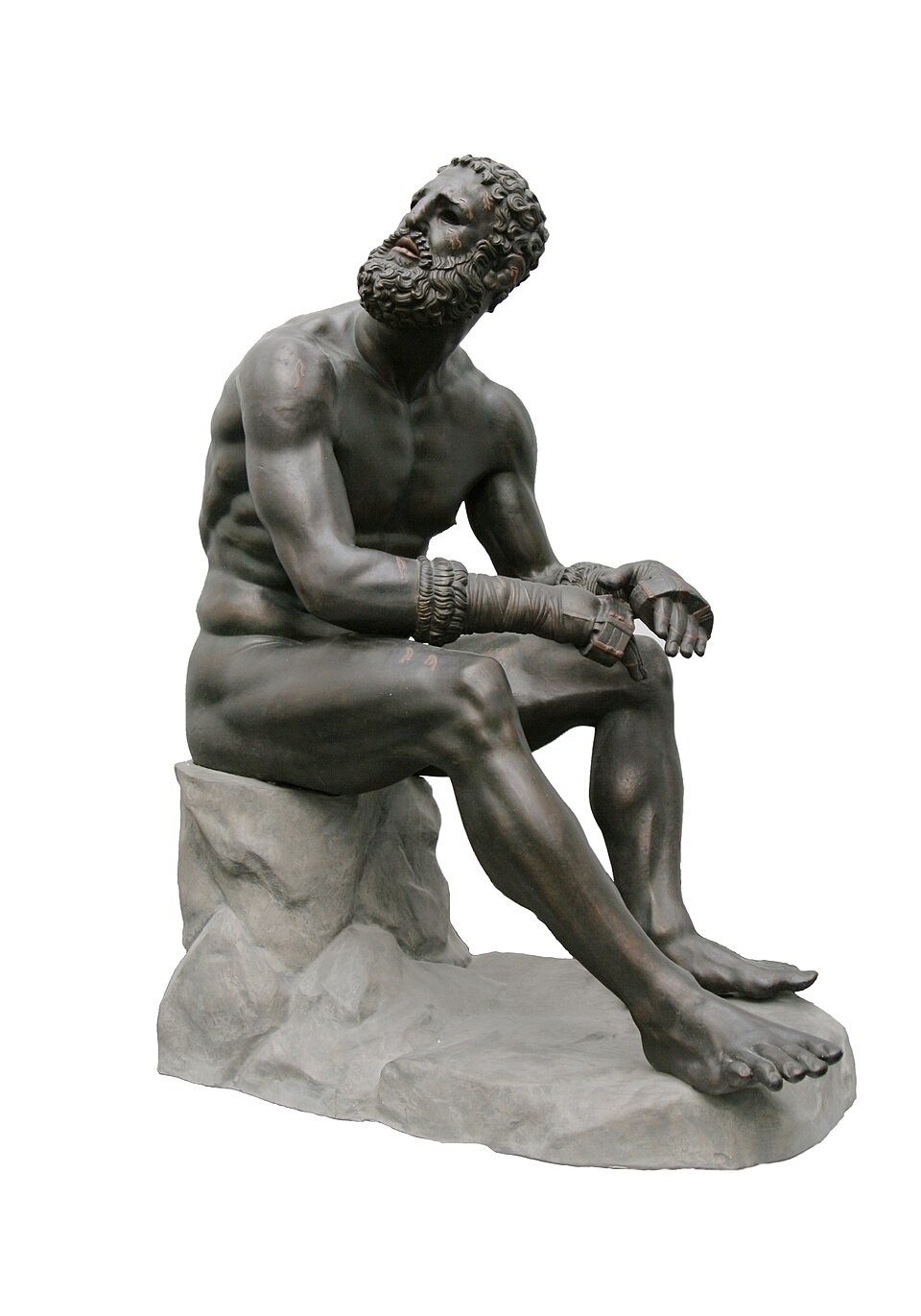 Leather wrappings on the fists are the closest ancient equivalent of modern hand wraps, not gloves: before our era, fights were fought essentially bare-knuckle.
The English prize ring
Modern boxing as an organized sport took shape in 18th-century England. Bouts were fought without gloves, to the point where one fighter was completely unable to continue, and for a long time were conducted with virtually no formal rules. In 1743, English champion Jack Broughton drew up the first set of rules for fistfighting, banning blows below the belt and blows against an opponent who was already down, and introducing the concept of a fighter down on the ring floor being given time to rise. Building on these principles, the London Prize Ring Rules were adopted in 1838, establishing the round ring markings, rounds that lasted until a fighter went down, and other formal standards; the rules were revised several times, in 1853 and 1866.
The last truly significant champion of the bare-knuckle era is considered to be the American John L. Sullivan, who held the championship under the London Prize Ring Rules and then — already wearing gloves — one of the first titles of the new era.
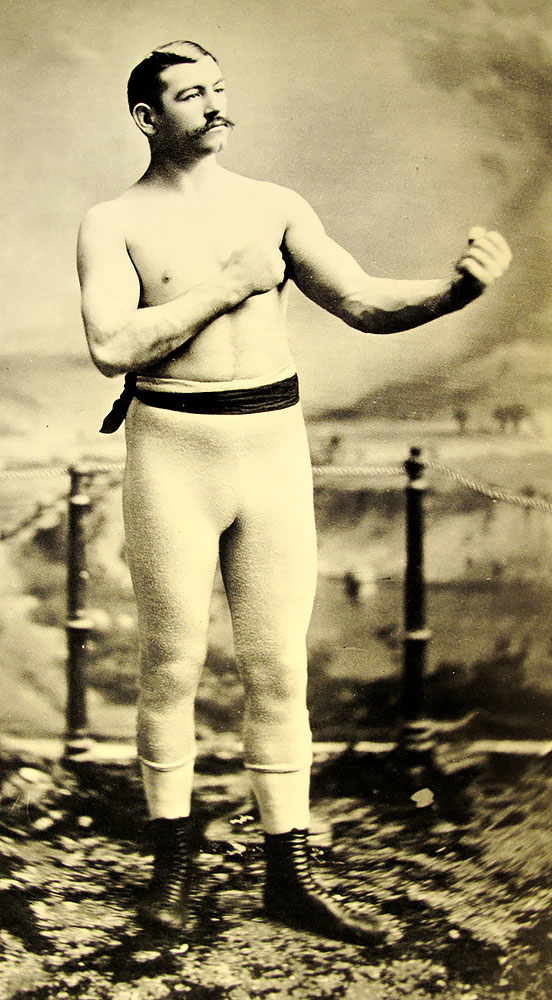 Sullivan was the last universally recognized world champion of the bare-knuckle era fought under the London Prize Ring Rules.
The Queensberry Rules and the switch to gloves
In 1867, sports official John Graham Chambers drew up a new set of rules, publicly endorsed by John Sholto Douglas, the 9th Marquess of Queensberry — in whose honor the rules were named the Marquess of Queensberry Rules. The key innovations were: mandatory boxing gloves, rounds of fixed length (three minutes) with a break between them, a ten-second count on a knockdown, and a ban on the wrestling holds characteristic of bare-knuckle fighting. It was these rules — with later refinements — that formed the basis of modern boxing, both amateur and professional.
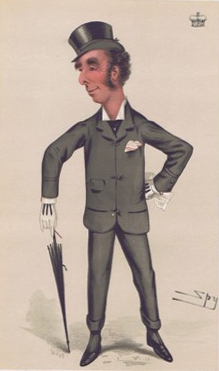 The Marquess's public endorsement gave the rules their name, even though they were actually drawn up by the official John Graham Chambers.
A symbolic date
On September 7, 1892, James J. Corbett knocked out John L. Sullivan in New Orleans and became the first heavyweight world champion whose title was won in a bout fought under the Queensberry Rules — with gloves and fixed rounds. This fight is generally regarded as the conventional dividing line between the bare-knuckle era and modern boxing.
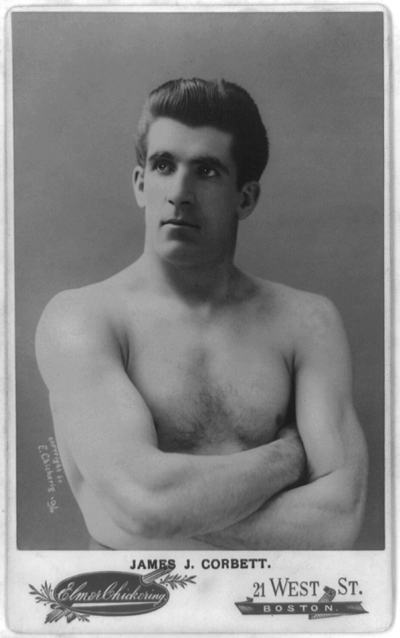 Corbett's win over Sullivan in 1892 was the first championship fight with gloves, and is conventionally taken as the starting point of the modern era of boxing.
The prewar era: Dempsey and the birth of big-money boxing
In the 1920s, boxing in the United States became a truly mass spectator sport for the first time. Heavyweight world champion Jack Dempsey, who held the title from 1919 to 1926, filled stadiums with tens of thousands of spectators — Dempsey's fight with Gene Tunney in Chicago in 1927, remembered in history as the "Long Count Fight," drew, by various estimates, more than 100,000 spectators in person and became one of the first truly mass sporting broadcasts on radio. It was in this era that the model of professional boxing as a commercial show with large purses, promoters, and press coverage took shape — the same model on which the industry is still built today.
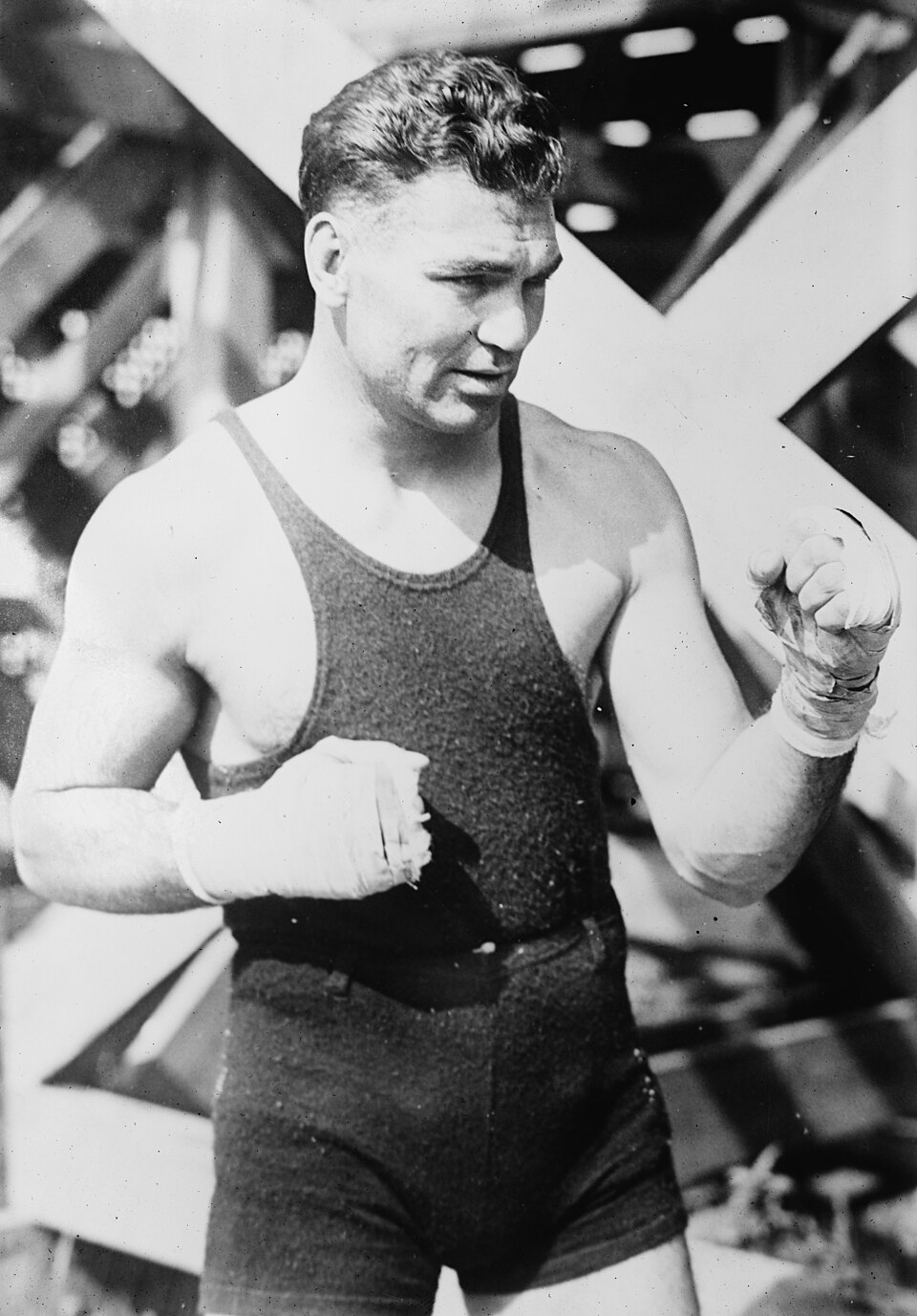 Dempsey was the first in the history of boxing to fill stadiums with a hundred thousand spectators, turning the championship fight into a mass media event.
Joe Louis: champion of the Depression and the war
Joe Louis won the heavyweight world championship in 1937 and held it until 1949 — 11 years and 8 months, longer than any other champion in heavyweight history, defending the title 25 times. For Americans of the Great Depression and World War II era, Louis became one of the first truly nationwide Black sports stars: his win over the German Max Schmeling in their 1938 rematch in New York — after losing to him two years earlier — took on symbolic political significance in the United States as a victory over Nazi propaganda, even though Schmeling himself was not a member of the Nazi party.
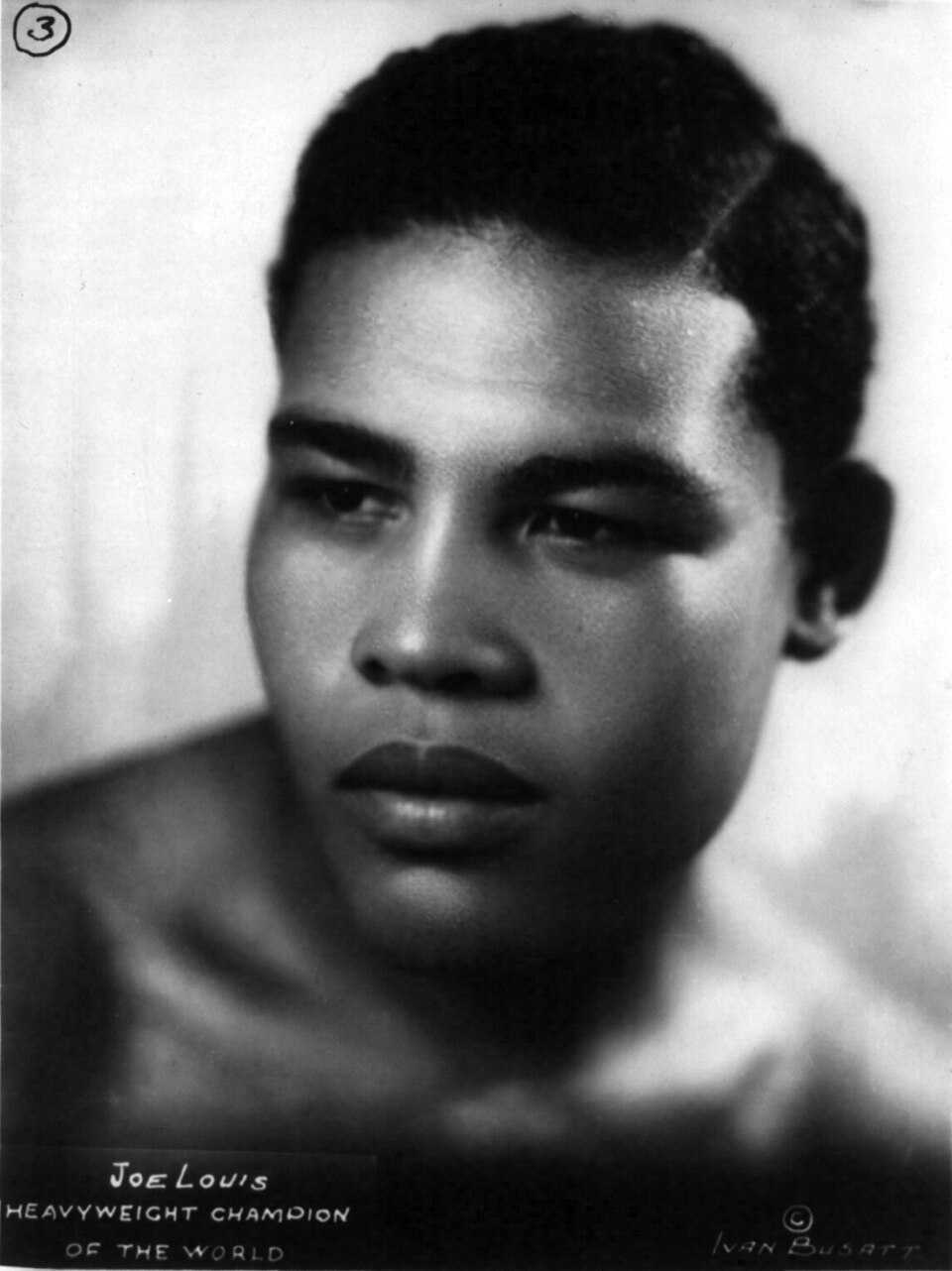 11 years and 8 months as champion — a record for the length of a heavyweight championship reign that still stands today.
Amateur and Olympic boxing
Boxing first appeared in the Olympic program in 1904 in St. Louis. At the 1912 Games in Stockholm, no boxing tournament was held — Swedish law at the time banned boxing matches; boxing returned to the program at the very next Games, in 1920 in Antwerp. The first international amateur boxing federation was formed in 1920, and in 1946 it became the basis for the founding of the International Boxing Association (AIBA), later renamed IBA.
In the second half of the 20th century, the Olympic ring saw its own long-running dynasties emerge: the Cuban Teofilo Stevenson won three consecutive Olympic gold medals at heavyweight (1972, 1976, 1980), a result later matched by his compatriot Felix Savon (1992, 1996, 2000) — neither of them ever turned professional, remaining symbols of the Cuban amateur school. Women's boxing entered the Olympic program much later — at the 2012 Games in London.
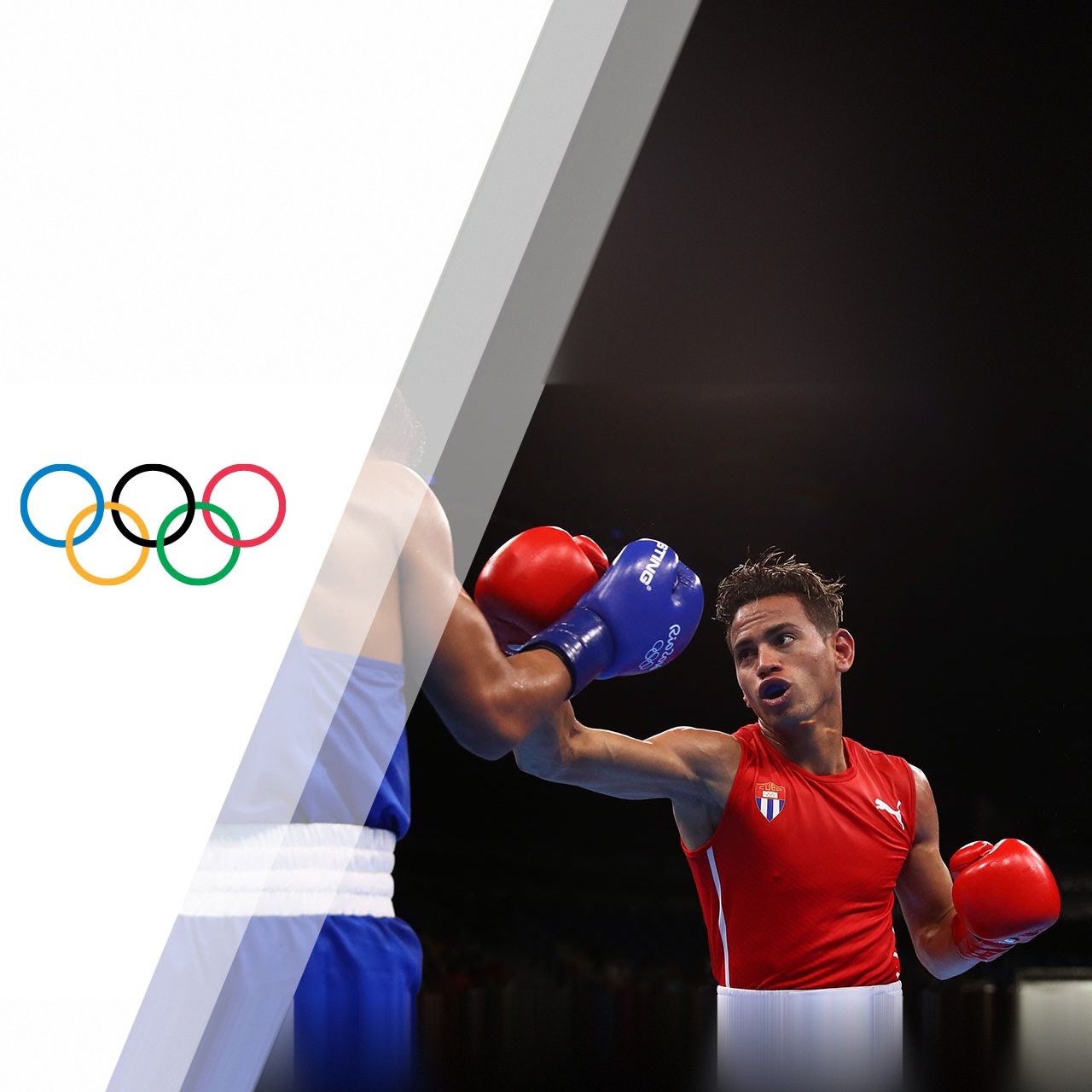
Boxing at the Olympic Games
The tournament format since 1904, judging scandals and reforms, women's boxing, the IBA recognition crisis — and complete statistics of Olympic champions in every weight category.
Read more →Muhammad Ali and the golden era of the heavyweight division
Cassius Clay won Olympic gold at light heavyweight at the 1960 Games in Rome, then turned professional and, in 1964, sensationally knocked out Sonny Liston to become heavyweight world champion. Shortly afterward he converted to Islam and took the name Muhammad Ali. In 1967, Ali refused induction into the U.S. Army on religious grounds amid the Vietnam War, and was stripped of his title and barred from competing for nearly four years; in 1971 the U.S. Supreme Court overturned his conviction. Returning to the ring, Ali became the first fighter in history to win the heavyweight world championship three times, winning two iconic fights along the way: the "Rumble in the Jungle" against George Foreman in Kinshasa in 1974, and the "Thrilla in Manila" against Joe Frazier in the Philippines in 1975.
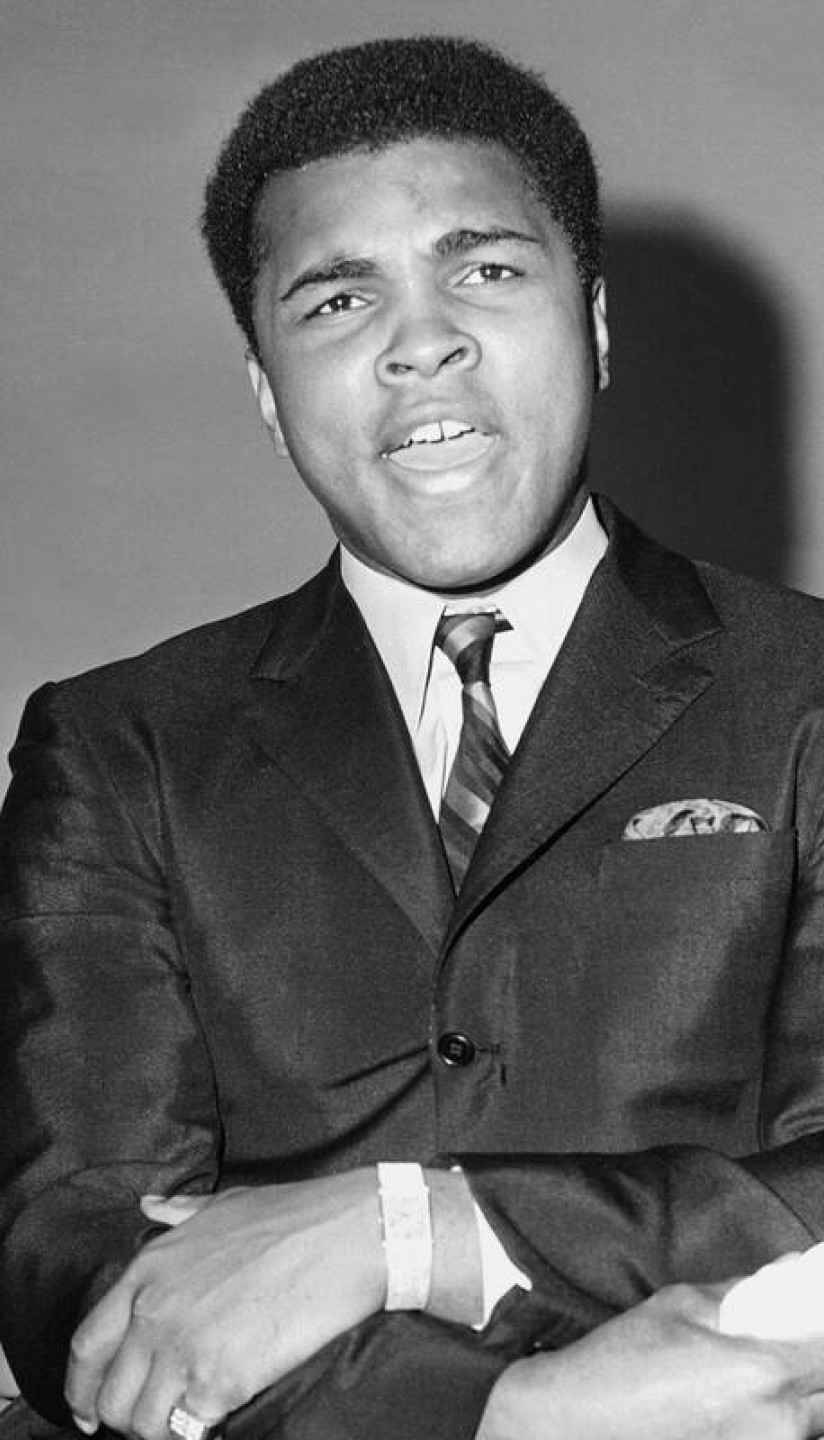 The only boxer to become heavyweight world champion three times — despite a four-year break in his career over his refusal of the draft.
Sanctioning bodies and the fragmentation of titles
For a long time, the status of "world champion" in professional boxing was determined simply by recognition from the press and other champions, with no single governing body. In 1921 the National Boxing Association (NBA) was formed in the United States, taking on the sanctioning of championship fights; in 1962 it was renamed the World Boxing Association (WBA). In 1963 the World Boxing Council (WBC) was founded in Mexico City. In 1983 the International Boxing Federation (IBF) split off, and in 1988 the World Boxing Organization (WBO) was formed in Puerto Rico. From that point on, professional boxing has had up to four recognized championship titles existing side by side in every weight category.
Against this backdrop, the 1980s produced the famous generation of the "Four Kings" of the middleweight and welterweight divisions — Sugar Ray Leonard, Marvin Hagler, Roberto Duran, and Thomas Hearns — whose fights against one another defined the decade. In 1986, Mike Tyson became the youngest heavyweight world champion in history at age 20, and his utter dominance in the late 1980s made him one of the most recognizable athletes on the planet.
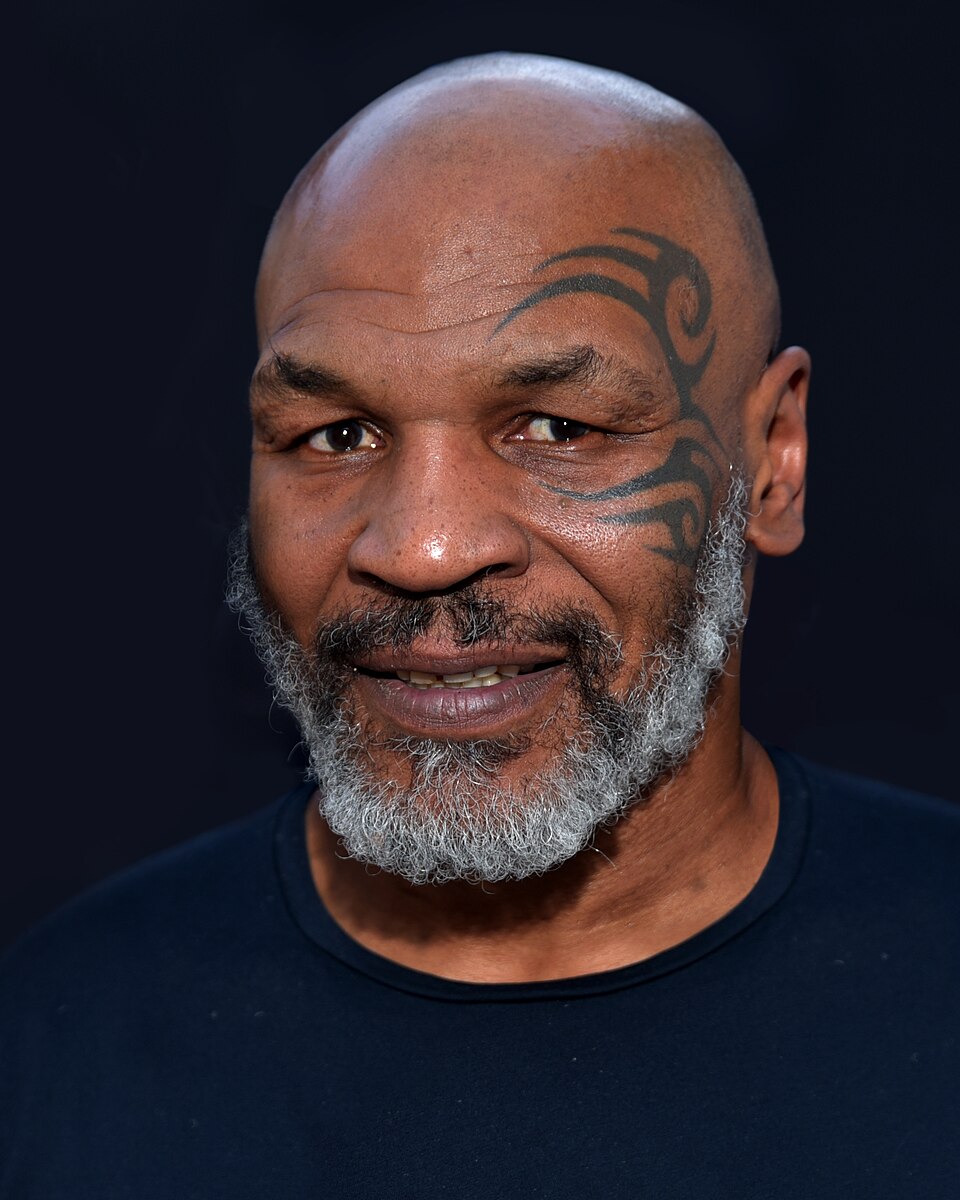 In 1986, Tyson became heavyweight world champion at age 20 — a record that still stands today.
Professional boxing in the 21st century
The fragmentation of titles among the WBA, WBC, IBF, and WBO has made undisputed champion status a rarity: few boxers manage to hold all the belts in one weight category at the same time. The 2015 fight between Floyd Mayweather Jr. and Manny Pacquiao, billed as the "Fight of the Century," became the highest-grossing pay-per-view broadcast in the history of boxing. In the 2020s, unification fights have become more prominent again: in 2021, Canelo Alvarez became the first boxer to unify all four super middleweight belts, and in 2024, Oleksandr Usyk became the first undisputed heavyweight world champion of the 21st century, defeating Tyson Fury.