IBA — International Boxing Association
The International Boxing Association (IBA) is an international boxing organization, historically known as AIBA. It grew out of the post-war system of amateur boxing, ran world championships and Olympic boxing for decades, and since 2023 the Olympic side of boxing has been run by World Boxing — while the IBA continues to operate as an independent international federation with its own tournaments and rankings.

Organization profile
| Parameter | Value |
|---|---|
| Full name | International Boxing Association |
| Historical name | AIBA / Association Internationale de Boxe Amateur |
| Legal form | Swiss registered association in the canton of Vaud |
| Head office | Maison du Sport International, Avenue de Rhodanie 54, 1007 Lausanne, Switzerland |
| Additional office | Office in Dubai, Fortune Executive, 802, Dubai, UAE |
| President | Umar Kremlev |
| Secretary General / Executive Director | Chris Roberts |
| Main tournaments | IBA world championships, youth and junior world championships, continental tournaments within the IBA system |
| Olympic status | Since 2023, the Olympic boxing line has been run by World Boxing |
History
From FIBA to AIBA
The international amateur boxing federation FIBA was created in 1920, when the sport needed unified rules for international competitions. After the Second World War, in 1946, AIBA was established; the first president was the Frenchman Emile Gremaux. From that point on, the organization became the main international center of amateur boxing.
In 1974, the first men's AIBA world championship was held in Havana. This was an important change: boxing gained a regular global tournament outside the Olympic cycle, and national teams gained another peak of the season. In 1989, at the world championship in Moscow, an electronic scoring system was used for the first time, part of a long history of judging reforms.
Women's boxing and program expansion
Women's boxing was officially recognized as an AIBA discipline in 1994. The first women's world championship was held in 2001 in Scranton, and in 2012 women's boxing entered the Olympic program at the Games in London. For IBA/AIBA, this was one of the most important shifts: the international system was no longer solely male, and separate weight categories, a calendar and a career pathway for women emerged.
In 2021, AIBA changed its weight category system: 13 men's and 12 women's weights were approved for elite competitions. This decision was explained by athlete safety, more precise distribution by weight, and expanded opportunities for countries where boxing develops across different anthropometric groups.
Renaming to IBA and reforms
In December 2021, an extraordinary congress changed the acronym from AIBA to IBA and approved a package of constitutional reforms aimed at modernizing the organization's governance.
The renaming was not simply a change of logo. The IBA began building a new public identity: higher prize money at world championships, its own commercial tournaments, financial support for national federations, and separate programs for judges, coaches and young athletes.
Relations with the IOC and World Boxing
Relations between AIBA/IBA and the IOC changed over the course of several years. Starting in 2019, the tournaments at the Tokyo 2020 and Paris 2024 Games were organized directly by special IOC structures.
As of 22 June 2023, the Olympic boxing tournament, including LA28, is organized by World Boxing — a new federation that received the corresponding status from the IOC.
On 20 March 2025, the IOC session included boxing in the LA28 Games program; the LA28 qualification system was built and approved by World Boxing together with the IOC. As a result, a practical fork emerged for national federations: participation in IBA tournaments and participation in the Olympic pathway are no longer one and the same channel.
For an athlete and a national federation, this means a split between two circuits. The IBA retains its own international competition system, but it is not the governing body of the Olympic tournament. If a federation is leading its boxers toward LA28, it has to take into account the requirements of World Boxing and the IOC, even if part of the national structure continues to compete within the IBA calendar.
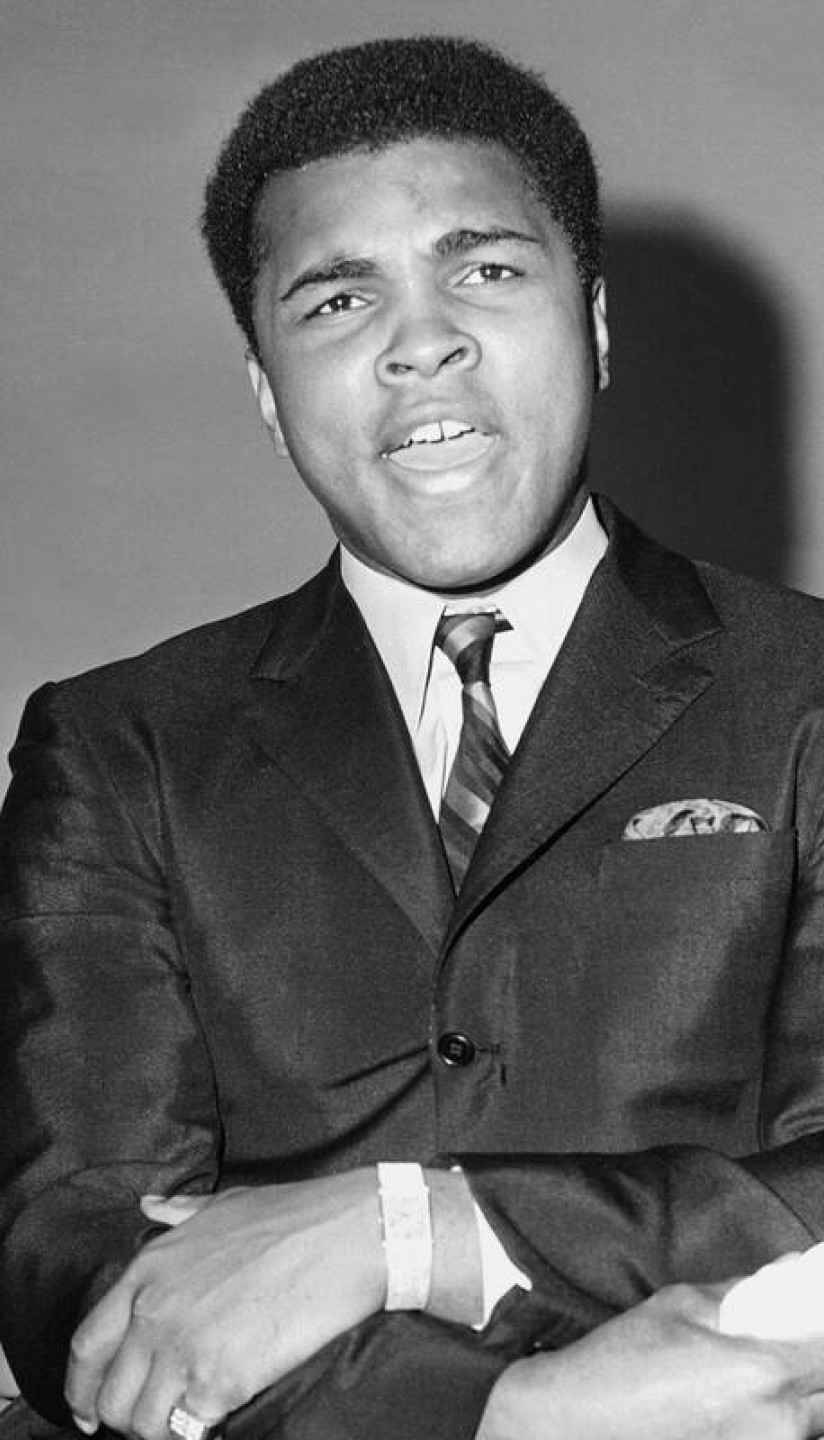
Boxing at the Olympic Games
AIBA/IBA was responsible for the Olympic tournament for nearly a century — from its debut in 1904 to 2023. The tournament format, judging reforms, women's boxing — and full statistics of Olympic champions in every weight category.
Read more →Organizational structure
Formally, the IBA is built as an international association of national federations. The highest political level is the congress of national federations, where key decisions, elections and constitutional changes are approved. Executive power is concentrated in the board of directors, and day-to-day work runs through offices and departments.
In 2026, the IBA describes its model as more centralized: key operational, financial and regulatory functions are meant to run through headquarters, while continental structures perform a representative, communication and coordination role. For federations, this means that the calendar, participation, judging programs, legal matters and international relations are increasingly concentrated at the level of IBA headquarters.
| Level | Role |
|---|---|
| Congress | political decisions of the national federations: elections, constitution, strategic decisions |
| Board of Directors | executive power, management of the federation and limited disciplinary authority |
| President and Secretary General / Executive Director | political leadership and operational management |
| IBA departments | sport, international relations, development, legal, finance, communications |
| Continental divisions | regional representation and links to federations across the continents |
| National federations | IBA's membership base, athlete entries, national calendar and links to local structures |
Competitions and sporting model
The IBA runs its own competitions and rules for international boxing. Central to this are the men's and women's world championships, youth and junior tournaments, rankings and development programs. In recent years, the IBA has actively emphasized prize money for athletes and the idea of a "career pathway" from amateur level to elite and professional boxing.
On the sporting side, three themes are especially important for the IBA:
- judging and refereeing — historically the most sensitive area of international boxing, the source of grievances against Olympic tournaments and world championships;
- integrity of competition — eligibility rules, vetting of officials, anti-doping mechanisms and disciplinary procedures;
- financial support — grants, equipment and assistance for national federations, especially those lacking funds for travel and participation in major events.
National federations
The membership of national federations at the IBA and at World Boxing has diverged. In some countries, both organizations list the same national federation; in others, they list different structures. For example, in the United States the IBA system lists the US Boxing Federation, while World Boxing lists USA Boxing; in Germany, too, the IBA and World Boxing name different organizations.
In the country articles, this is reflected through the link to the specific legal federation, not just to the name of the country. The map below shows the national federations currently active on the IBA's list: countries with a completed StrikerStat article are highlighted in blue and open the country page, while the remaining IBA members are shown in grey and give only the federation's name in a tooltip. In some countries, IBA and World Boxing list the same national federation; in others, different legal structures; and some countries appear on only one of the two lists.
IBA national team ranking
The IBA maintains its own ranking of national teams based on points earned at tournaments within the organization's system. Below is the top twenty as of 23 August 2026 (the source itself does not publish an update date; this is the date the snapshot was taken); the full table of more than 150 federations is available on the official ranking page.
| Rank | Team | Points |
|---|---|---|
| 1 |  Uzbekistan Uzbekistan | 48,700 |
| 2 |  Russia Russia | 40,850 |
| 3 |  Kazakhstan Kazakhstan | 38,300 |
| 4 |  DR Congo DR Congo | 36,825 |
| 5 |  Australia Australia | 33,725 |
| 6 |  Morocco Morocco | 29,600 |
| 7 |  Serbia Serbia | 19,950 |
| 8 |  Brazil Brazil | 19,200 |
| 9 |  China China | 19,100 |
| 10 |  Armenia Armenia | 18,175 |
| 11 |  Azerbaijan Azerbaijan | 17,150 |
| 12 |  Spain Spain | 15,825 |
| 13 |  Algeria Algeria | 15,550 |
| 14 |  Thailand Thailand | 15,325 |
| 15 |  French Polynesia French Polynesia | 14,850 |
| 16 |  New Zealand New Zealand | 14,700 |
| 17 |  Ukraine Ukraine | 14,550 |
| 18 |  Bulgaria Bulgaria | 14,450 |
| 19 |  Zambia Zambia | 13,275 |
| 20 |  Turkey Turkey | 13,100 |
Practical significance
For boxers, the IBA remains a stage for international competition and status within its own competitive system. For national federations, it means access to the IBA calendar, contact with other members, development programs and possible prize-money tournaments. But for the Olympic pathway after 2025, the World Boxing / IOC circuit has become the decisive one.
The current picture of world amateur boxing is therefore split in two: the IBA retains its historical infrastructure, part of the federations, and its own competitions, while World Boxing has taken on the Olympic function. This is exactly the split that explains why some countries now have two parallel federations, while in others the same organization tries to work with both international centers at once.